






Renesas Electronics RX261 Microcontrollers
Renesas Electronics RX261 Microcontrollers offer a 40% boost in CPU performance and 42% lower power consumption in active mode compared to the RX231. The Renesas Electronics RX261 is highly efficient for power-sensitive applications. The microcontrollers feature a snooze mode that reduces power consumption for intermittent operations. Equipped with CTSU2SL touch IP, the devices provide enhanced noise immunity and water resistance, making them suitable for harsher environments. The RSIP-E11A security IP adds robust system protection with hardware security engines and key management functions. Additionally, the microcontrollers support 5V operation for superior noise immunity.
Features
- Best-in-class CPU performance and low power consumption
- 64MHz RXv3 core, 69µA/MHz in active mode, 1µA in standby mode with SRAM retention
- Snooze mode, peripheral functions can operate temporarily even in standby mode
- Up to 512KB code flash, 8KB data flash, 128KB SRAM
- Third-generation capacitive touch sensing unit (CTSU2SL)
- Support 5V operation
- CAN FD and USB full-speed host/function
- RSIP-E11A security IP with AES, ECC, and SHA engines
Applications
- Home appliances (cookers, water heaters, refrigerators, washers)
- Building automation (elevators, HVAC, thermostats)
- Industry automation (PLCs, robots)
- Healthcare (blood glucose monitors, wearable devices)
Videos

Example Application

Resources
- Differentiate HMI Products with Energy-Saving and High-Precision Touch Functions with RX261/RX260 MCUs
- Renesas Introduces New RX261/RX260 Group MCUs with Outstanding Power Efficiency, Advanced Touch Functions and Robust Security
- User’s Manual: Hardware
- User’s Manual: Software
- RX261,260 Handbook for Engineers
- White Paper: Implement High-Precision Capacitive Touch Sensor Across a Wide Range of HMI Applications
- Application Note: Differences Between the RX260/RX261 Group and RX210 Group
- Application Note: Differences Between the RX260/RX261 Group and the RX130 Group
- RX Family Part Number Guide
Evaluation Board
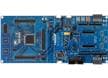
Renesas Electronics EK-RX261 Evaluation Board for RX261
Evaluate and develop applications with the RX261 Microcontrollers.
Paskelbta: 2024-10-21
| Atnaujinta: 2025-01-14