






Texas Instruments AWRL6844 mmWave Radar Sensor

Texas Instruments AWRL6844 mmWave Radar Sensor enables designers to create more reliable automotive in-cabin safety features, such as child presence detection, seat belt reminders, and intrusion alerts. This cost-effective single SoC with an on-chip AI accelerator is based on FMCW radar technology with operation in the 57GHz to 64GHz band, while the low-power architecture is ideal for power-constrained applications. The AWRL6844 offers four switchable power domains: RF/analog sub-system, front-end controller sub-system (FECSS), application sub-system (APPSS), and DSP sub-systems (DSS). Texas Instruments AWRL6844 mmWave Radar Sensor features scalable, multi-function capabilities and a space-efficient package, all designed to provide better performance over alternative sensing technologies.
Features
- FMCW transceiver
- Integrated PLL, transmitter, receiver, baseband, and ADC
- 57GHz to 64GHz coverage with 7GHz continuous bandwidth
- 4 receive channels and 4 transmit channels
- 13dBm typical output power per Tx
- 12.5dB typical noise figure
- -89dBc/Hz typical phase noise at 1MHz
- FMCW operation
- 10MHz IF bandwidth, real-only Rx channels
- Ultra-accurate chirp engine based on fractional-N PLL
- Per transmitter binary phase shifter
- Processing elements
- Arm® R5F® core with double precision FPU (200MHz)
- Hardware accelerator (HWA 1.2) for FFT, log magnitude, and CFAR operations (200MHz)
- C66x DSP (450MHz) for post-processing radar data
- Supports multiple low-power modes, including idle mode and deep sleep mode
- Power management
- 1.8V and 3.3V IO support
- Built-in LDO network for enhanced PSRR
- 2 power rails for 1.8V IO mode, 3 power rails for 3.3V IO mode
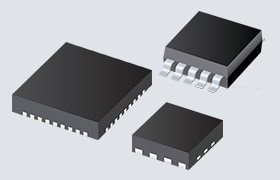
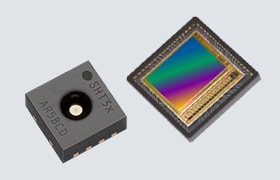
- FCCSP package with 17 x 17 BGA grid, 207 BGA balls and 9.1mm x 9.1mm dimensions
- Built-in calibration and self-test
- Host interface
- 3x UART
- 2x CAN-FD
- 2x SPI
- LVDS for data transfer of raw ADC sample capture
- Other interfaces available to user applications, including QSPI, I2C, JTAG, GPIOs, PWM, and GPADCs
- Device security
- Programmable embedded hardware security module (HSM)
- Secure authenticated and encrypted boot support
- User-programmable root keys, symmetric keys (256 bit), asymmetric keys (up to RSA-4K or ECC-512) with key revocation capability
- Cryptographic hardware accelerators: PKA with ECC/RSA, AES (up to 256 bit), SHA (up to 512 bit), TRNG/DRBG and SM2, SM3, SM4 (Chinese crypto algorithms)
- ISO21434 cyber security certification targeted
- Internal memory
- 2.5MBytes on-chip RAM
- 512KB R5F TCMA RAM
- 256KB R5F TCMB RAM
- 384KB DSS L2 RAM
- 512KB DSS L3 RAM
- 896KB DSS L3 shared RAM (can be shared with TCMs)
- Functional safety-compliant targeted
- Developed for functional safety applications
- Hardware integrity up to ASIL B targeted
- ISO 26262 functional safety certification targeted
- AEC Q-100 targeted
- Clock source
- 40MHz crystal for primary clock
- Supports externally driven clock (square/sine) at 40MHz
- 32kHz internal oscillator for low-power operations
- -40°C to +140°C junction temperature range
Applications
- Interior cabin sensing
- Child presence detection
- Seat belt reminder
- Vehicle occupancy detection, localization, and classification
- Vehicle occupant vital sign monitoring
- Intruder detection
- Gesture-based HMI