






STMicroelectronics NUCLEO-C562RE Development Board

STMicroelectronics NUCLEO-C562RE Development Board is an STM32 Nucleo‑64 platform that offers a cost‑effective and versatile solution for evaluating emerging ideas and developing prototypes. The STMicroelectronics NUCLEO‑C562RE board allows users to explore different combinations of performance and power‑efficiency features available in STM32 microcontrollers. In supported configurations, using an internal or external SMPS significantly reduces power consumption during Run mode. Compatibility with Arduino Uno V3 connectors and ST morpho headers enables straightforward expansion of the board’s functionality using a wide range of specialized expansion shields.
The STM32 Nucleo‑64 board integrates an ST‑LINK debugger and programmer, eliminating the need for an external debug probe. In addition, the board is supported by STM32Cube, providing access to comprehensive, free software libraries and example projects that simplify application development and evaluation.
Features
- STM32 microcontroller in an LQFP64 package
- 1x user LED shared with ARDUINO
- 1x user and 1x reset push-buttons
- 32.768kHz crystal oscillator
- ARDUINO Uno V3 expansion connector
- ST morpho extension pin headers for full access to all STM32 I/Os
- USB SNK/UFP (FS mode) on USB Type-C® connector
- CAN FD
- STLINK-V3EC on the USB Type-C connector
- MIPI debug connector
- 24MHz HSE
- Cryptography
- Flexible power-supply options
- ST-LINK USB VBUS
- External sources
- Comprehensive free software libraries and examples available with the STM32Cube MCU package
- Support of a wide choice of Integrated Development Environments (IDEs), including IAR Embedded Workbench®, MDK-ARM, and STM32CubeIDE
Applications
- Rapid prototyping and proof‑of‑concept development
- Embedded system development and evaluation
- Industrial control and automation
- Industrial IoT (IIoT) and connected devices
- Consumer electronics prototyping
- Automotive and transportation subsystems (non‑safety critical)
- Secure embedded applications
Related MCUs
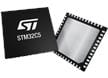
STMicroelectronics STM32C5 Arm® Cortex®-M33 Core Mainstream MCUs
These MCUs are designed to support the development of cost-effective applications.
Complete Your Design

STMicroelectronics Standard Products
A broad range of drop-in replacements for general-purpose analog ICs, discretes, and serial EEPROMs.