
STEVAL-PMIC25V1

STMicroelectronics
511-STEVAL-PMIC25V1
STEVAL-PMIC25V1

Gam.:

Aprašymas:
Power Management IC Development Tools Evaluation board high integ STPMIC25 power management IC for microprocessor

Eksploatacijos Laikotarpis:
Naujas Produktas:
Naujiena iš šio gamintojo.

Prieinamumas: 5

Turime sandėlyje:
5 Galime išsiųsti iš karto
Gamintojo numatytas pristatymo laikas
3 Savaičių Apytikriai apskaičiuotas gamybos laikas gamykloje, jei dalių kiekis didesnis nei nurodyta.
Min. 1   Užsakoma po 1   Maks. 10
Vieneto kaina:
-,-- €
Plėt. Kaina:
-,-- €
Numatomas Įkainis:
Šis Produktas Siunčiamas NEMOKAMAI

Kainodara (EUR)

Qty. Vieneto kaina
Plėt. Kaina
107,33 € 107,33 €

Produkto Požymis Atributo vertė Pasirinkite Požymį
STMicroelectronics
Gaminio kategorija: Power Management IC Development Tools
RoHS:  
Evaluation Boards
Power Management Specialized
2.8 V to 5.5 V
STPMIC25
Prekės Ženklas: STMicroelectronics
Skirta naudoti su: Factory Automation
Interface Type: I2C
Pakavimas: Bulk
Gaminio tipas: Power Management IC Development Tools
Gamyklinės pakuotės kiekis: 1
Subkategorija: Development Tools
Vieneto Svoris: 33,800 g
Rasta produktų:
Norėdami rodyti panašius produktus, pažymėkite bent vieną langelį
Pasirinkite bent vieną žymimąjį langelį, kad būtų rodomi panašūs šios kategorijos produktai.
Pasirinkti atributai: 0

TARIC:
8473302000
USHTS:
9023000000
ECCN:
3A991.a.2

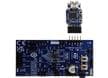
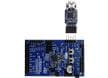
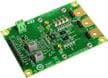
STEVAL-PMIC25V1 Evaluation Board

STMicroelectronics STEVAL-PMIC25V1 Evaluation Board is a power management IC evaluation board for the highly integrated STPMIC25. The STMicroelectronics board is designed to manage the power requirements of the core, memory, and interfaces of the STM32MP2x series MPU and other application microprocessors. The kit includes a USB dongle, which provides I2C access to the configuration registers of the STPMIC25 device, where voltage settings, power sequences, protection thresholds, and other parameters can be set. The evaluation board includes header connectors for external access to the embedded regulators and switches in the device, and internal routing via jumpers to satisfy any physical configuration requirements. The passive components on the board are chosen for optimal performance across most use conditions, and three push buttons and digital I/Os allow the triggering of the digital controls of the device.